Nature does not bestow virtue; to be good is an art.
-- Seneca Ad Lucilium Epistulae Morales
Thursday, September 30, 2010


Saturday, September 25, 2010
Another bogus quote: "It is the duty of every patriot to protect his country from its government."
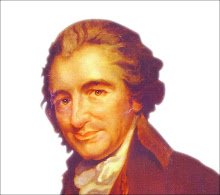
This quote has long since gone viral, plastered all over the WWW and mistakenly attributed to Thomas Paine. You won't find it in any of Paine's works because he simply never said nor wrote it. The actual quote is (drum roll, please) .....
“A patriot must always be ready to defend his country against his government.” Edward Abbey A Voice Crying in the Wilderness (Vox Clamantis en Deserto) : Notes from a Secret Journal (1990) ISBN 0312064888
“A patriot must always be ready to defend his country against his government.” Edward Abbey A Voice Crying in the Wilderness (Vox Clamantis en Deserto) : Notes from a Secret Journal (1990) ISBN 0312064888
Thursday, September 2, 2010
Thomas Paine on wealth and economic justice.
"I care not how affluent some may be, provided that none be miserable
in consequence of it. But it is impossible to enjoy affluence with the
felicity it is capable of being enjoyed, while so much misery is
mingled in the scene.
The sight of the misery, and the unpleasant sensations it suggests,
which, though they may be suffocated cannot be extinguished, are a
greater drawback upon the felicity of affluence than the proposed ten
per cent upon property is worth.
He that would not give the one to get rid of the other has no charity,
even for himself.
There are, in every country, some magnificent charities established by
individuals. It is, however, but little that any individual can do,
when the whole extent of the misery to be relieved is considered.
He may satisfy his conscience, but not his heart. He may give all that
he has, and that all will relieve but little. It is only by organizing
civilization upon such principles as to act like a system of pulleys,
that the whole weight of misery can be removed."
-Thomas Paine, Agrarian Justice, 1797.
in consequence of it. But it is impossible to enjoy affluence with the
felicity it is capable of being enjoyed, while so much misery is
mingled in the scene.
The sight of the misery, and the unpleasant sensations it suggests,
which, though they may be suffocated cannot be extinguished, are a
greater drawback upon the felicity of affluence than the proposed ten
per cent upon property is worth.
He that would not give the one to get rid of the other has no charity,
even for himself.
There are, in every country, some magnificent charities established by
individuals. It is, however, but little that any individual can do,
when the whole extent of the misery to be relieved is considered.
He may satisfy his conscience, but not his heart. He may give all that
he has, and that all will relieve but little. It is only by organizing
civilization upon such principles as to act like a system of pulleys,
that the whole weight of misery can be removed."
-Thomas Paine, Agrarian Justice, 1797.
Glenn Beck -- recent Beckapalooza
By any credible source, he only mustered about 85,000 + or - to his latest Beckapalooza. That's penny-ante. The concern of people like you and I must be for the demagogue to come who will, if Amerika continues down its present course, head a legion of hatred and fear much greater and more disastrous to Progressives and indeed all honest citizens.
Saturday, August 7, 2010
Sunday, July 25, 2010
Paine, taxation and redistribution
In reply to a correspondent and friend on:
Thanks for the note, S. The point, it seems
to me, is that here (Rights of Man II) we have
Paine recommending a confiscatory tax above a
certain income level -- £23,000/annum. The currency
calculator that I used indicated that in so-called real
dollars today 2010 that would translate to a bit over 3 million.
1792 is only midpoint in Paine's public career
and he's already moved beyond Adam Smith and
embraced the need for redistribution of wealth
and power. Midpoint in his career. He still has Agrarian Justice
and Dissertation on First Principles of Government
to write -- both of which discuss the dangers of and
potential remedies to the property and capital system-- and
his even later eight Letters to the Citizens of the United
States where he condemned monopoly,
undue corporate influence, usury, military
procurement fraud and the whole host of
predatory pests that plagued the young republic
and plague still its ever thinning shadow.
Paine embraced commerce as a visible representation
of what he called "society" or man's greatest blessing.
But he was no libertarian.
"... when property is made a pretense for unequal or exclusive rights,
it weakens the right to hold the property, and provokes indignation
and tumult; for it is unnatural to believe that property can be secure
under the guarantee of a society injured in its rights by the
influence of that property." Thomas Paine - Dissertation on First Principles of Government, 1795.
--
© Kenneth W. Burchell 2010, All Rights Reserved
Thanks for the note, S. The point, it seems
to me, is that here (Rights of Man II) we have
Paine recommending a confiscatory tax above a
certain income level -- £23,000/annum. The currency
calculator that I used indicated that in so-called real
dollars today 2010 that would translate to a bit over 3 million.
1792 is only midpoint in Paine's public career
and he's already moved beyond Adam Smith and
embraced the need for redistribution of wealth
and power. Midpoint in his career. He still has Agrarian Justice
and Dissertation on First Principles of Government
to write -- both of which discuss the dangers of and
potential remedies to the property and capital system-- and
his even later eight Letters to the Citizens of the United
States where he condemned monopoly,
undue corporate influence, usury, military
procurement fraud and the whole host of
predatory pests that plagued the young republic
and plague still its ever thinning shadow.
Paine embraced commerce as a visible representation
of what he called "society" or man's greatest blessing.
But he was no libertarian.
"... when property is made a pretense for unequal or exclusive rights,
it weakens the right to hold the property, and provokes indignation
and tumult; for it is unnatural to believe that property can be secure
under the guarantee of a society injured in its rights by the
influence of that property." Thomas Paine - Dissertation on First Principles of Government, 1795.
--
© Kenneth W. Burchell 2010, All Rights Reserved
Friday, July 23, 2010
How Glenn Beck Warped Extreme Liberal Thomas Paine into a Teabagger
Thanks to Vermont T. for the link to this well written and cogent commentary by Hrafnkell Haraldsson:
http://www.politicususa.com/en/beck-thomas-paine
http://www.politicususa.com/en/beck-thomas-paine
Subscribe to:
Posts (Atom)

 Posts
Posts