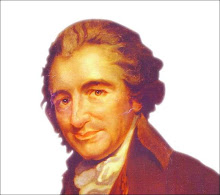
Thanks to historian and Thomas Paine biographer
Harvey J. Kaye for forwarding this very fine article at:
http://www.folkworks.org/content/view/35703/106/
Friday, June 18, 2010


Paine portrait vandalized 2.
Don't miss the latest details. Just click on the link to the right of this post entitled "A Mystery of Two Portraits of Paine" or just click this link http://kenburchell.blogspot.com/p/mystery-of-two-paine-portraits.html
Wednesday, June 16, 2010
Thomas Paine portrait vandalized.
An attempt has been made to contact the curators at the museum
in order to determine the nature of the "portrait" (most likely a print)
and details of the incident.
http://www.miamiherald.com/
in order to determine the nature of the "portrait" (most likely a print)
and details of the incident.
http://www.miamiherald.com/
Thomas Paine on vice.
"An association of vices will reduce us more than the sword." Thomas Paine, American Crisis IX, 1780.
Thomas Paine on property rights.
"There could be no such thing as landed property originally. Man did not make the earth, and though he had a natural right to occupy it, he had no right to locate as his property in perpetuity on any part of it." Thomas Paine, Agrarian Justice, 1796.
Saturday, June 12, 2010
Thomas Paine on pre-emptive war.
"And were America, instead of becoming an example to the Old World of good and moral government and civil manners, or, if they like it better, of gentlemanly conduct toward other nations, to set up the character of ruffian, that of word and blow, and the blow first, and thereby give the example of pulling down the little that civilization has gained upon barbarism, her independence, instead of being an honor and a blessing, would become a curse upon the world and upon herself." Thomas Paine, To the Citizens of the United States VI, 1802-1806.
Sunday, June 6, 2010
Thomas Paine on war profiteering.
"That persons who are hunting after places, offices and contracts, should be advocates for war, taxes and extravagance, is not to be wondered at; but that so large a portion of the people who had nothing to depend upon but their industry, and no other public prospect but that of paying taxes, and bearing the burden, should be advocates for the same measures, is a thoughtlessness not easily accounted for. " Thomas Paine, To the Citizens of the United States VII, 1802-1806.
Subscribe to:
Posts (Atom)

 Posts