This blog has moved to
http://kennethburchell.substack.com
You are invited to join in the conversation, learning, and fun. Invite your friends, comment, and participate
Thursday, July 1, 2021


Friday, March 23, 2018
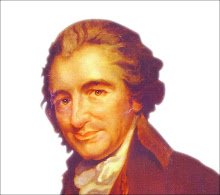
Contemporary poem re: Thomas Paine
Impressions On A Passing Cloud

White and fair she moved on the wind,
With the speed of a greyhound, the Golden Hind,
She scudded along on a windward tack,
Making for heaven, the sky at her back,
She sailed unmanned, this ghost of a ship,
But for Captain Tom Paine, who vowed he’d come back.
For the sad Age of Reason, before the winds ran,
Searching the seas for the lost Rights of Man
[Christopher Black's blog is highly recommended for more than his poem
https://christopher-black.com/2015/08/25/impressions-on-a-passing-cloud/ ]
Saturday, March 3, 2018
Thursday, March 2, 2017
Paul Craig Roberts and Lewis Lapham on Paine and plain speaking
A recent Paine reference:
http://www.paulcraigroberts.or
Seldom in history have the people had a voice. Those who try to give people a voice are portrayed negatively by the ruling elites. Thomas Paine’s Common Sense is the founding document of the American Revolution. His book, Rights of Man, sold 500,000 copies, making it the best-selling book of the 18th century. In Britain his reward was to be charged with sedition by the government and declared an outlaw. In the US, Federalist newspapers in Boston portrayed him as a drunkard and infidel. There is no monument to him in Washington, D.C. As Lewis Lapham has written, “Paine’s plain and forthright speaking is out of tune with our own contemporary political discourse, which for the most part is the gift for saying nothing.” Or for flumuxing you with false news.
http://www.paulcraigroberts.or
Sunday, October 16, 2016
The Origin and Rise of Government
"Here
then is the origin and rise of government; namely, a mode rendered
necessary by the inability of moral virtue to govern the world; here too
is the design and end of government, viz. Freedom and security. And
however our eyes may be dazzled with show, or our ears deceived by
sound; however prejudice may warp our wills, or interest darken our
understanding, the simple voice of nature and reason will say, 'tis
right."
—Thomas Paine, Common Sense, 1776
—Thomas Paine, Common Sense, 1776
Saturday, July 2, 2016
Changes in the Paine Review
Dear Readers, thanks for keeping track over recent years of the heretofore somewhat scholarly history focus of this blog. At the time it began, that was the prevailing direction in this author's work and there has not been time to do more. The direction of this blog will -- as you can tell -- change a bit. There will be more political and social commentary -- hopefully some useful exchange with thoughtful readers -- while retaining our "set the record straight" feature with Thomas Paine studies in particular and history more broadly.
Tom Paine: the worker who helped make a revolution
It should be added that it was NOT John Adams who wrote that the sword of Washington would have been raised in vain but for the pen of Tom Paine. That was Joel Barlow. Otherwise a good, timely and overall accurate essay.
http://www.ueunion.org/ue-news-feature/2012/tom-paine-and-the-4th-of-july-the-worker-who-helped-make-a-revolution
http://www.ueunion.org/ue-news-feature/2012/tom-paine-and-the-4th-of-july-the-worker-who-helped-make-a-revolution
Subscribe to:
Posts (Atom)

 Posts
Posts